
Audience guide
Best Office Chair for Small Spaces in 2026
In a small apartment, the chair has to work as furniture in the room — not only as a task seat. We compared footprint, seat width, whether arms tuck or come off, how far the chair slides under a shallow desk, and how heavy the silhouette feels in a studio. For layout ideas around the chair, see our Small Apartment Office Ideas guide.
Updated August 2026 · For small spaces building healthier desk setups
Key takeaways
- Measure three things: desk knee-well width, depth to the wall or bed, and the chair’s base diameter plus a few inches to sit down.
- Removable or low-profile arms matter more in small rooms than a headrest.
- Sayl is our compact premium pick; Branch is the smaller-budget mesh chair with arms that come off.
- Wide racing chairs (including many Titan Evo configs) fight small rooms even when the seat is comfortable.
- Push-in clearance turns a bedroom office back into a bedroom at 6 p.m.
At a glance
Best office chairs for small spaces compared
| Chair | Best For | Price | Key Feature |
|---|---|---|---|
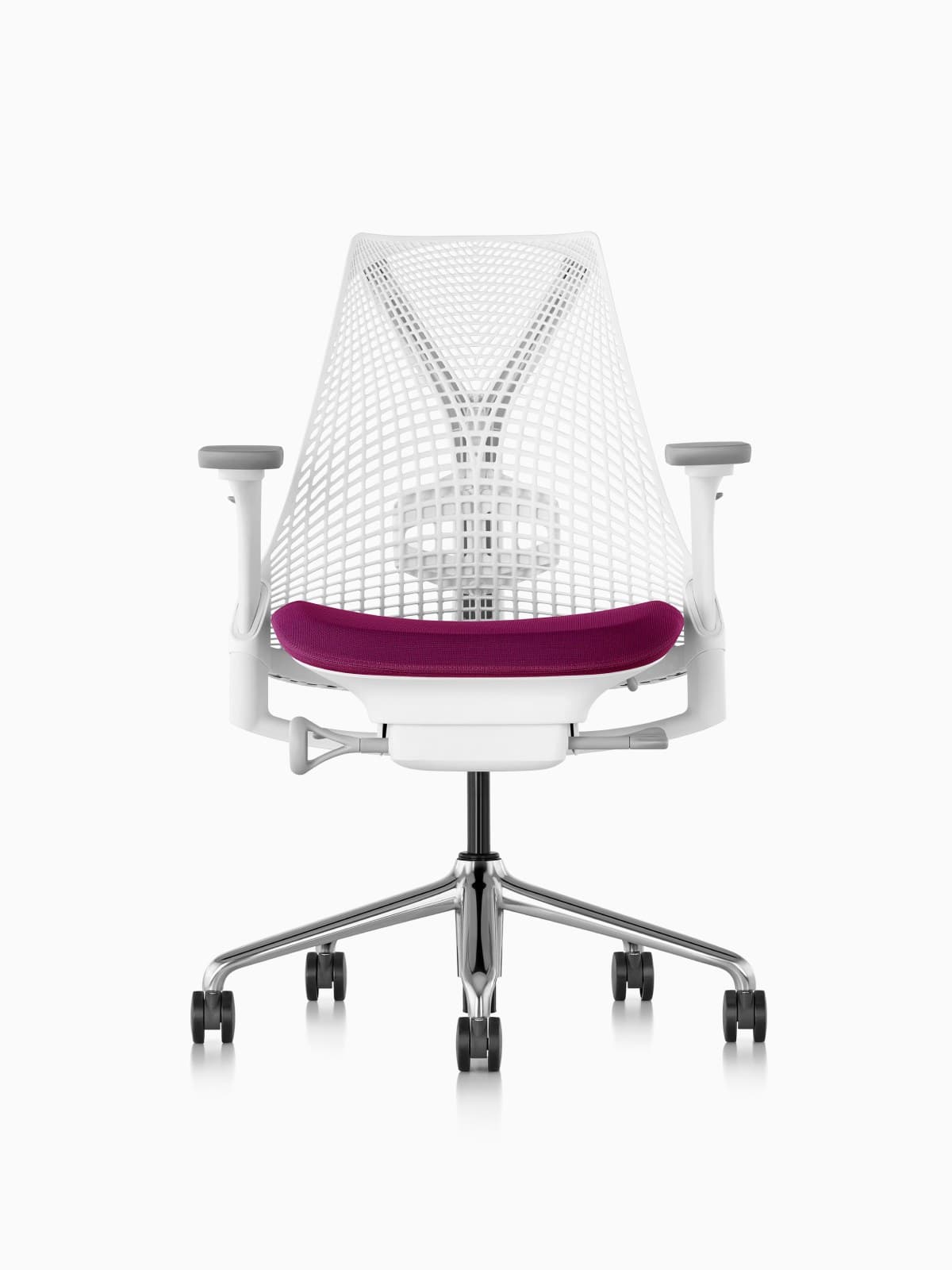
| Herman Miller Sayl Chair | Compact footprint and an airy silhouette | $500–$900 | Open Y-Tower, smaller than Aeron |
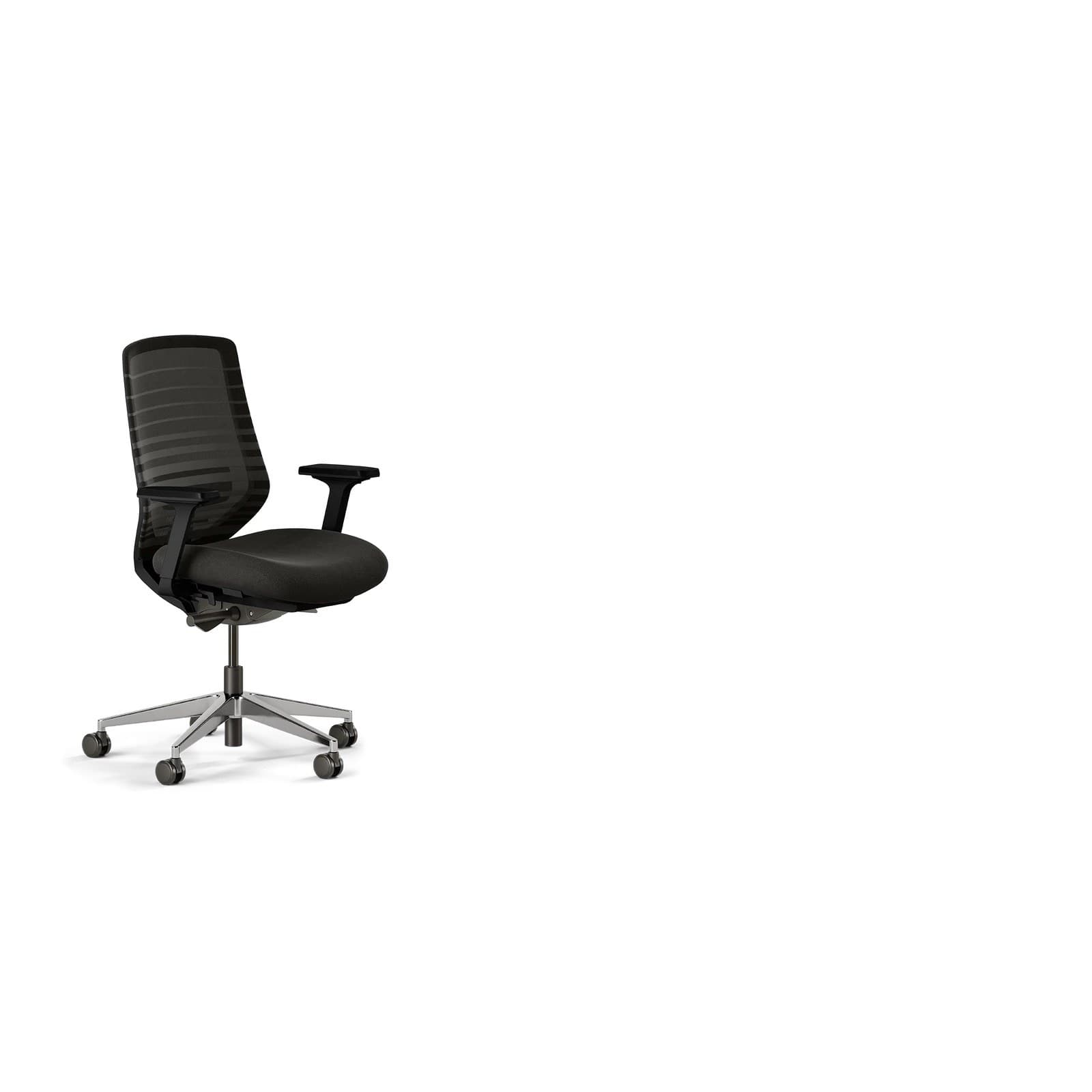
| Branch Ergonomic Chair | Removable arms and mesh on a smaller budget | $300–$400 | Arms come off for desk clearance |
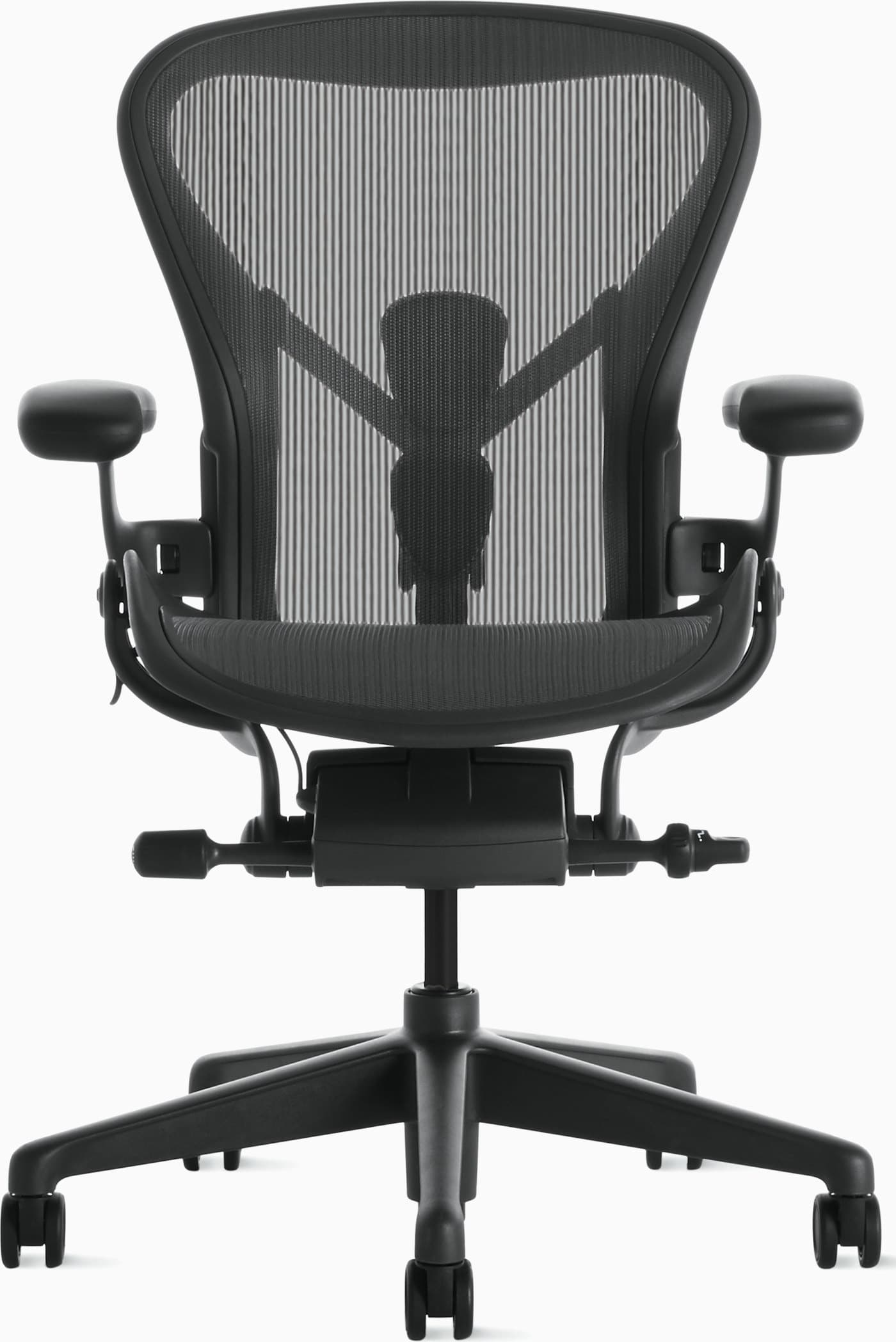
| Herman Miller Aeron Chair | All-day mesh when Size A/B still fits the nook | $1,400–$1,800 | Three sizes; mesh reads lighter than foam |
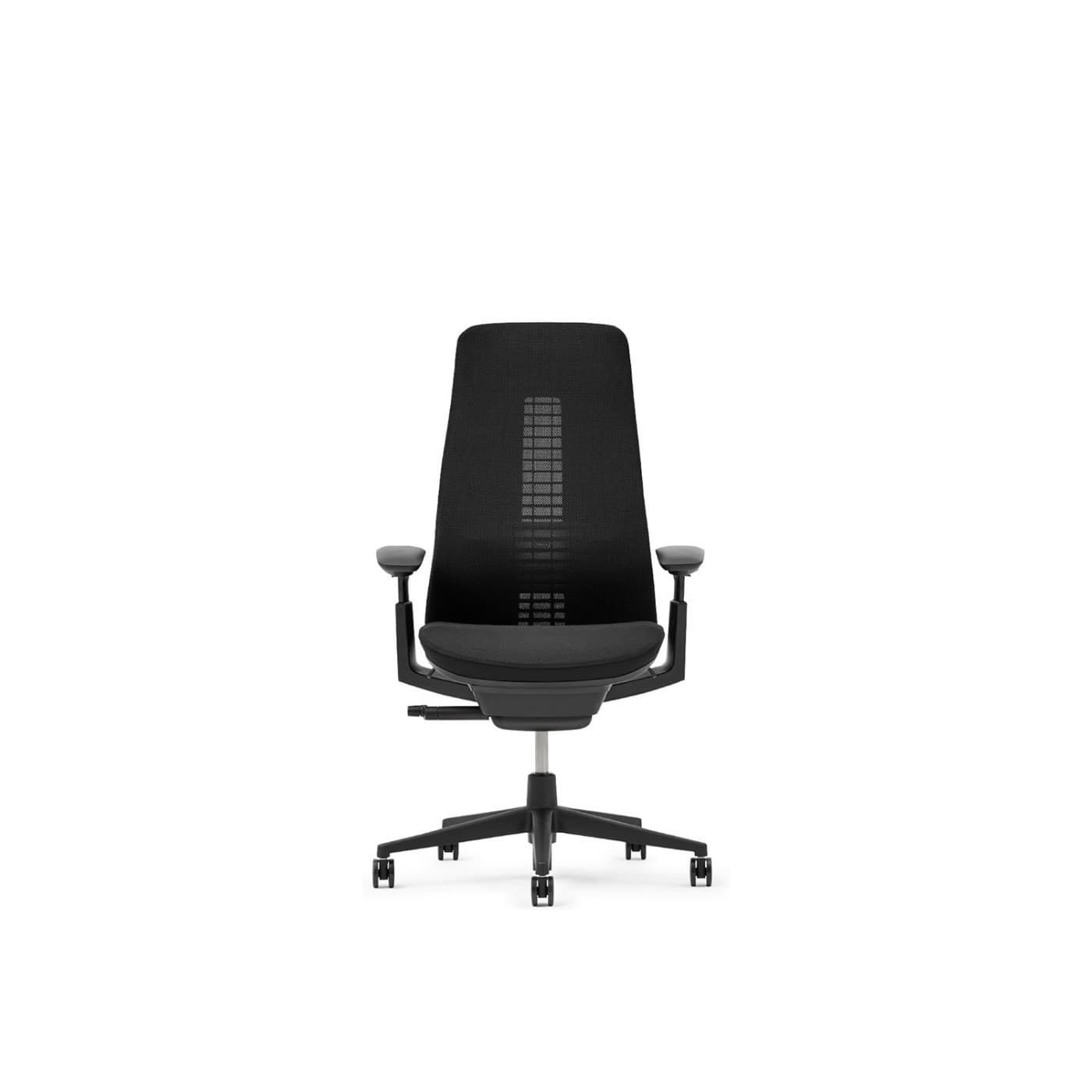
| Haworth Fern Chair | Support without a bulky outer frame | $1,000–$1,600 | Edgeless Wave Suspension |
| Steelcase Leap Chair | All-day comfort when the nook is not tiny | $1,000–$1,500 | LiveBack; larger footprint |
| Secretlab Titan Evo | Only if the room is wider than it looks | $500–$650 | Large racing footprint |
Work-day fit
Why small spaces need a different office chair
A ‘small space’ chair is not the same as a cheap chair or a short-person chair. The constraint is geometry: the base, the arms, and the visual mass in a room that is also a bedroom, hallway, or living area.
People in studios also need the chair to disappear after work. If it cannot slide under the desk, it stays in the only walkway. That requirement knocks out a lot of otherwise excellent wide chairs.
Desk against a wall or in a closet nook
Knee wells are shallow. Arms and seat pans that stay proud of the desk prevent a full push-in.
Shared rooms
The chair is visible on video calls and on the weekend. An open mesh back reads smaller than a racing bucket.
Hard floors and rugs
Apartment flooring varies. Soft casters or a small mat protect vinyl; a huge mat eats the only remaining floor.
Standing up without a runway
You need just enough roll-back to stand. If the bed is 24 inches behind the desk, a deep reclining gaming chair will not fit.
Common pain points
- Chair arms that hit the desk apron
- A base that will not fit between bed and desk
- Gaming chairs that dominate a 10-foot room
- No path behind the chair to stand up
Priorities
What makes a good office chair for a small room?
- Smaller floor footprint and base diameter
- Seat and arm width that clear a shallow desk
- Ability to slide under the desk when work ends
- Lower visual bulk in a studio or bedroom office
Chair footprint
Essential
Base diameter and overall width, including arms at their narrowest setting.
Why it matters: The star base is what hits nightstands, heaters, and door swings. Compact task chairs beat executive and racing footprints.
Seat width and arm design
Essential
Arms that narrow, pivot in, or come off so the chair clears a desk apron.
Why it matters: Fixed wide arms are the usual reason a chair will not tuck. Branch’s removable arms are a small-space feature, not a gimmick.
Under-desk slide
Essential
Seat height range and arm clearance that let the chair park under the worksurface.
Why it matters: In a studio, parked-under is how you get the walkway back. Measure desk height and apron depth before ordering.
Visual footprint
Highly recommended
Open backs, lighter colors, and no giant headrest so the room still reads as a home.
Why it matters: A black racing throne in a 200-square-foot studio becomes the largest object in the home. Sayl’s open back is designed to look smaller.
Desk compatibility
Highly recommended
Works with shallow writing desks, wall-mounted surfaces, and compact sit-stand frames.
Why it matters: Many apartment desks are 20–24 inches deep. A deep seat pan plus 4D arms stuck wide will not fit that furniture.
Picks
Recommended office chairs for small spaces
Each pick is chosen for how small spaces actually sit and work — not a generic bestseller list.
Best Overall
Herman Miller
Sayl Chair
Best for: Compact footprint and an airy silhouette
Key feature: Open Y-Tower, smaller than Aeron
Sayl is the small-space Herman Miller: unframed suspension back, Harmonic tilt, and less visual mass than Aeron or Embody. It still carries a 12-year warranty. Optional lumbar is worth adding if you sit long hours in that corner desk.
Warranty: 12-year warranty
Weight capacity: Up to 350 lbs
Lumbar: Optional adjustable lumbar; suspension back provides flex
Armrests: Fixed or height-adjustable arms depending on config
Pros
- • Great for small apartments and tight corners
- • Breathable suspension back
- • Lower price than Aeron or Embody
- • Modern, airy look
Cons
- • Less support range than Embody or Leap
- • Not ideal for every taller body
- • Fewer ultra-fine adjustments than flagships
$500–$900
Best Value
Branch
Ergonomic Chair
Best for: Removable arms and mesh on a smaller budget
Key feature: Arms come off for desk clearance
A mid-compact mesh chair whose 3D arms can be removed when they hit a cheap desk’s apron. Seat depth helps shorter and taller people in the same household. Not as visually light as Sayl, but much easier on the budget.
Warranty: 7-year warranty
Weight capacity: Up to 275 lbs
Lumbar: Height-adjustable lumbar pad
Armrests: 3D arms (height, width, depth); removable
Pros
- • Excellent price-to-features ratio
- • Breathable for long sessions
- • Clean home-office aesthetic
- • Easy assembly and wide availability
Cons
- • Not fleet-grade like Herman Miller or Steelcase
- • Fewer fine adjustments than premium chairs
- • Optional headrest sold separately
$300–$400
Best if You Size Down
Herman Miller
Aeron Chair
Best for: All-day mesh when Size A/B still fits the nook
Key feature: Three sizes; mesh reads lighter than foam
Aeron is not a tiny chair, but Size A (and sometimes B) plus mesh is still slimmer than most gaming seats. Measure the base. If the only path behind the desk is tight, Sayl is the safer geometry.
Warranty: 12-year warranty
Weight capacity: Up to 350 lbs depending on size
Lumbar: PostureFit SL sacral and lumbar pads
Armrests: Fully adjustable arms (height, width, depth, pivot)
Pros
- • Excellent long-session comfort
- • Highly adjustable and durable
- • Stays cool during warm days
- • Strong resale value and warranty
Cons
- • Premium price
- • Mesh feel is not for everyone
- • Sizing matters — wrong size reduces comfort
$1,400–$1,800
Best Edgeless Back
Fern’s back has no heavy outer hoop, which reads cleaner in a small room than many upholstered task chairs. It is still a full-size chair — confirm width — but it avoids the ‘office throne’ look.
Warranty: 12-year warranty on many commercial configs
Weight capacity: Up to 400 lbs on standard Fern
Lumbar: Wave Suspension system with optional lumbar
Armrests: 4D adjustable arms
Pros
- • Excellent dynamic back comfort
- • Distinctive modern design
- • Breathable mesh options
- • Premium build quality
Cons
- • Premium price
- • Less ubiquitous retail availability than Aeron
- • Learning curve vs. knob-heavy chairs
$1,000–$1,600
Best Support If Space Allows
Steelcase
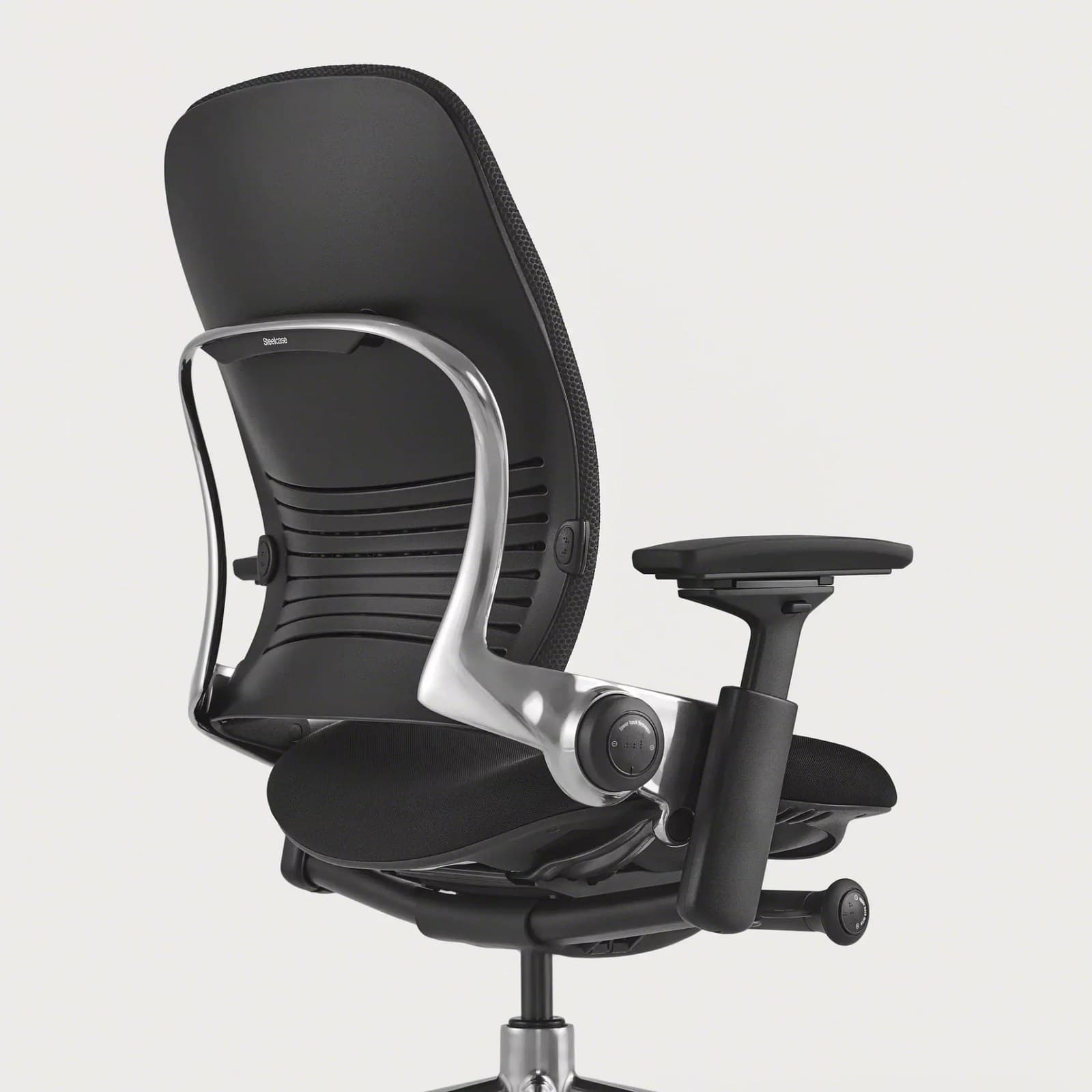
Leap Chair
Best for: All-day comfort when the nook is not tiny
Key feature: LiveBack; larger footprint
Leap is an excellent work chair and a mediocre studio chair. The base and upholstered back take more floor and visual space than Sayl. Choose it when you have a dedicated corner and care more about 8-hour comfort than parking the chair under a 20-inch desk.
Warranty: 12-year warranty
Weight capacity: Up to 400 lbs
Lumbar: Height-adjustable lumbar with firmness control; LiveBack flex
Armrests: 4D arms (height, width, depth, pivot)
Pros
- • Excellent all-day comfort
- • Deep adjustability
- • Strong lower-back support options
- • Proven fleet-grade durability
Cons
- • Premium price
- • Bulkier than compact task chairs
- • Warmer than open-mesh designs
$1,000–$1,500
Usually Skip in Tight Rooms
Secretlab
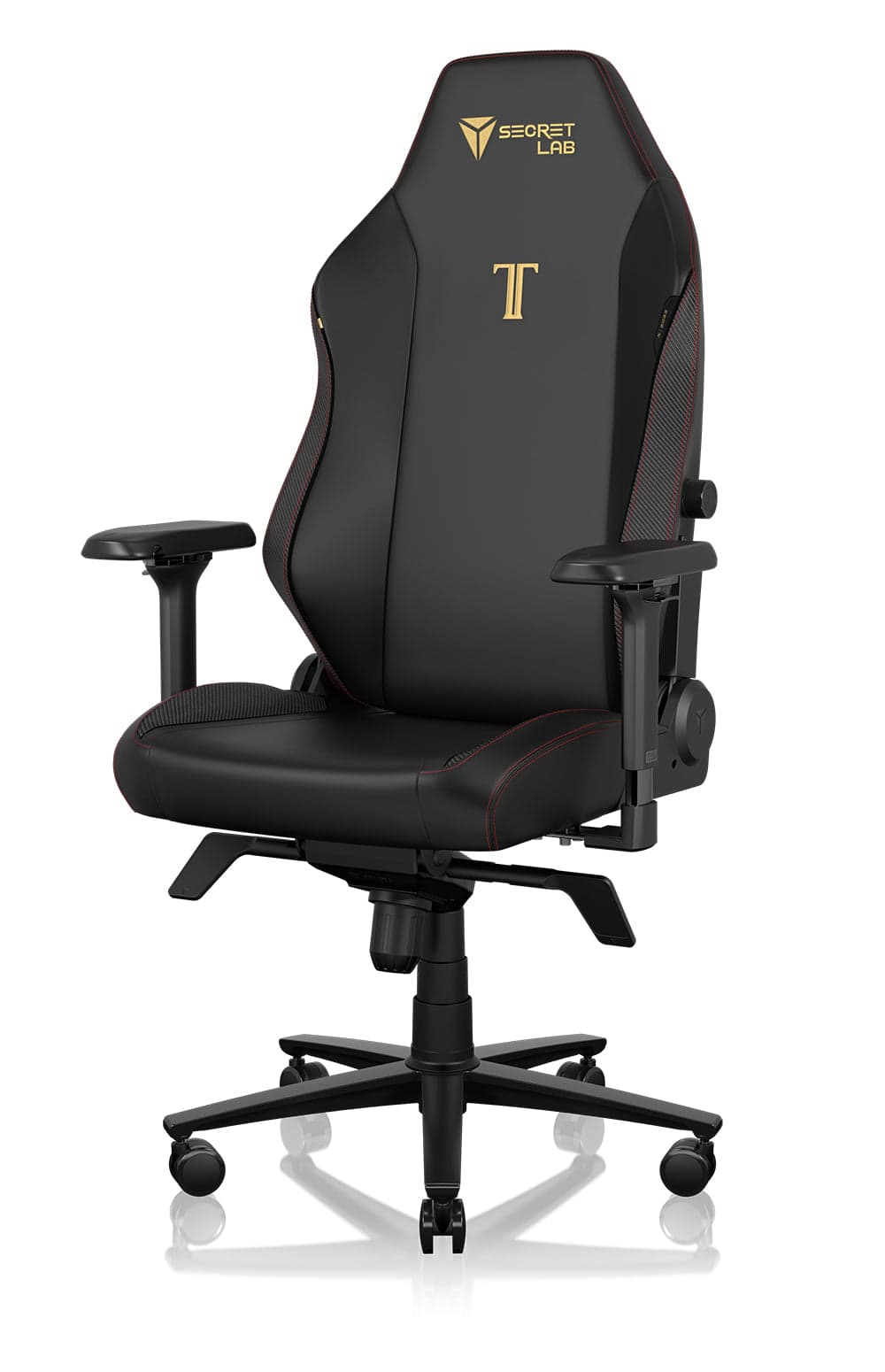
Titan Evo
Best for: Only if the room is wider than it looks
Key feature: Large racing footprint
Comfortable for many people, but the bucket, headrest, and wide arms fight small apartments. We list it so you can compare: if Titan Evo is on your shortlist, measure twice. Sayl or Branch will almost always park better.
Warranty: 5-year warranty on typical retail configs
Weight capacity: Up to about 287 lbs (Regular); Plus size higher
Lumbar: Magnetic lumbar support with height/depth adjustment
Armrests: 4-way (4D) armrests
Pros
- • Strong value vs. flagship ergonomic chairs
- • Customizable look
- • Supportive for long sessions
- • Widely available
Cons
- • Bulkier footprint
- • Can run warm in leatherette
- • Less refined than Steelcase/Herman Miller
$500–$650
Buying advice
What makes a good office chair for small spaces?
Buy the chair that fits the room’s measurements, then worry about lumbar. The opposite order is how gaming chairs end up in hallways.
Measure the park-under envelope
Desk height, apron/modesty-panel depth, and inner width between legs. Arms must go narrower than that width or come off.
Leave a stand-up lane
You need space to roll back and stand. If the bed or wall is tight, a deep reclining chair is the wrong shape even if the seat is excellent.
Prefer open backs and removable arms
Sayl’s unframed back and Branch’s removable arms are small-space features. Headrests add height that dominates a studio on camera and in person.
Match casters to the floor
Hard casters chew vinyl; soft casters drag on thick rugs. A small chair mat is fine; a huge mat in a studio is another object to live around.
Think about the room when work ends
If the desk is in a bedroom, the chair should tuck. That is as much a buying requirement as lumbar.
Watch-outs
Common problems small spaces face
The chair takes up the whole corner
Racing and executive chairs have wide bases and high backs. Switch to an open task chair (Sayl) or a mid-compact mesh chair (Branch).
Small apartment office ideas →Arms hit the desk and will not go under
Fixed or wide 4D arms plus a shallow desk. Look for removable arms (Branch) or narrower arm spans. Lower the arms fully before you decide it ‘does not fit.’
You cannot slide the chair under the desk
Seat too high at minimum, arms too thick, or a desk with a thick apron. Measure before buying; a wall-mounted or trestle desk with an open knee well helps.
How to build a home office →The chair blocks the only walkway
There is no roll-back lane. Flip the desk to a wall, shorten the chair’s parked depth, or use a chair that tucks fully. Layout beats a smaller cushion.
Small apartment setup →FAQ
Office chair FAQs for small spaces
What is the smallest comfortable office chair?
In our catalog, the Herman Miller Sayl is the compact comfortable pick: open back, smaller silhouette than Aeron, 12-year warranty. Branch is smaller-budget and can get narrower with arms removed. ‘Smallest’ is still limited by a five-star base — ultra-narrow stools are not all-day chairs.
Should I buy a chair with arms for a small desk?
Yes if the arms go in, down, or off. No if they are fixed wide. Arms help shoulders at a keyboard; they hurt small desks when they cannot tuck. Branch’s removable arms are the compromise.
How much space should I leave behind an office chair?
Enough to roll back and stand without hitting the wall or bed — often about 24–30 inches behind the desk edge, more if you recline. If you cannot spare that, prioritize a chair that parks fully under the desk and sit with a shallower recline.
Are gaming chairs bad for small rooms?
Most are, because of width, headrest height, and a base meant for a larger bedroom gaming setup. The Titan Evo is a capable seat that still fails many studios on geometry.
Can I use a dining chair in a small office?
For occasional laptop use, yes. For daily work, a compact task chair with lumbar and arm height will fit many of the same footprints and treat your back better. Dining chairs rarely tuck lumbar where you need it.
What desk depth works with a compact chair?
Many apartment desks are 20–24 inches deep. That can work if arms tuck and the monitor is on an arm. Deeper desks are easier on the chair but steal more of the room — see the small apartment office guide for layouts.
Is the Aeron too big for an apartment?
Size C often is. Size A, and sometimes B, can work if the base clears the nook. If you are unsure, Sayl is the easier small-space Herman Miller.
Do I need a chair mat in a small room?
Use a small mat to protect vinyl or to roll on a rug. A mat that extends far behind the chair steals the walkway you were trying to save.
Final recommendation
Our pick for small spaces
For most small apartments, buy the Herman Miller Sayl — compact, visually light, and still a serious task chair. If the budget is tighter, the Branch Ergonomic Chair with arms removed or pulled in is the practical tuck-under option. Skip wide racing chairs unless you have measured a real stand-up lane and a desk that can take the width.