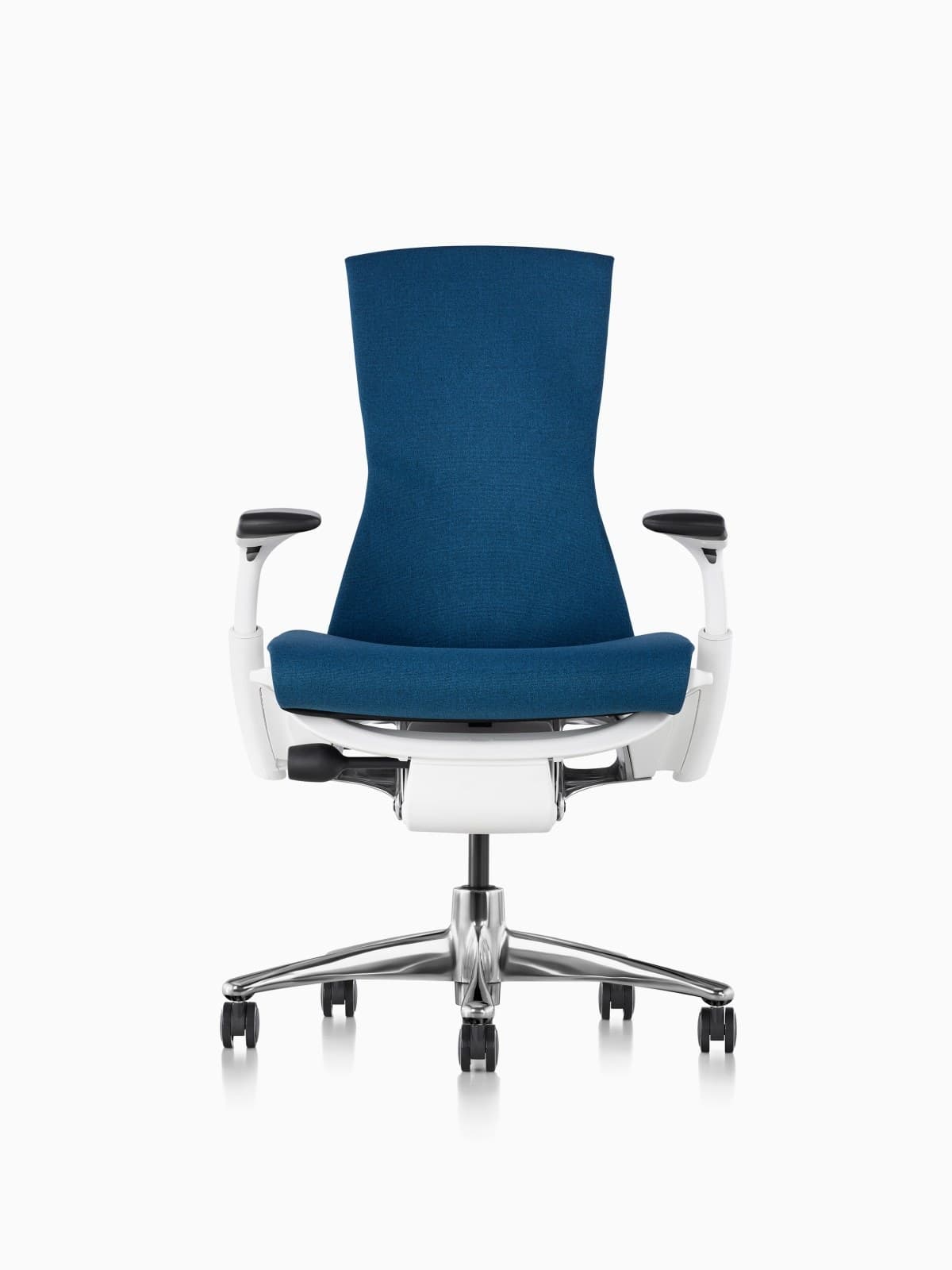
Herman Miller
Herman Miller Embody Review: Is It Worth the Price?
The Herman Miller Embody is designed for people who sit long workdays and prefer fabric-backed Pixelated Support over Aeron mesh, with Backfit and adjustable seat depth on a single-size premium chair. Its high price is easiest to justify with daily use and Herman Miller’s long warranty — not casual laptop sessions.
- Best for:
- Full-time remote workers who want distributed fabric support, adjustable seat depth, and dislike mesh sling seats
- Main benefit:
- Pixelated Support with Backfit and adjustable seat depth
- Main drawback:
- High price and warmer fabric layers versus open mesh
Reviewed by AuraOX home office editors
Some links on AuraOX are affiliate links. If you purchase through them, AuraOX may earn a commission at no additional cost to you.
Our evaluation considers manufacturer specifications, warranty terms, sizing guidance, and how the Embody compares with other premium ergonomic chairs for full-time remote work. We do not claim multi-week hands-on lab testing unless noted on a specific page. How AuraOX evaluates products
Quick verdict
- Best for
- Full-time remote workers who want distributed fabric support, adjustable seat depth, and dislike mesh sling seats
- Not ideal for
- Tight budgets, users who run hot and prefer open mesh, or anyone who needs a factory headrest or Aeron-style multi-size shells
- Biggest advantage
- Pixelated Support with Backfit and adjustable seat depth
- Biggest drawback
- High price and warmer fabric layers versus open mesh
- Price tier
- Typically about $1,800–$2,200 depending on finish and options
- Warranty
- 12-year, 3-shift Herman Miller / MillerKnoll limited warranty (terms apply)
- Overall recommendation
- Worth it for heavy daily sitters who prefer Embody’s pixelated fabric support over mesh; skip it if price, heat buildup, or Aeron sizing flexibility matter more.
Embody Chair pros and cons
Pros
- Pixelated Support matrix distributes pressure across seat and back differently than a mesh sling
- Backfit lets you set the back’s alignment to your spine; PostureFit / pixelated support shapes lower-back contact
- Adjustable seat depth (about 15–18") helps fit a wider range of thigh lengths on one size
- Fabric seat and back layers often feel more “cushioned” than Aeron mesh for people who dislike sling seats
- 12-year, 3-shift commercial-grade warranty and die-cast aluminum frame/base on typical configs
Cons
- Premium price — usually higher than common Aeron configs; hard to justify for light desk use
- Single size (no A/B/C shells) — fit depends more on seat-depth and Backfit dialing than discrete sizes
- Fabric layers hold more warmth than open mesh; hot sitters may prefer Aeron
- Arm adjustments are typically height and width — not as many arm axes as fully adjustable Aeron arm configs
- No factory headrest on standard work-chair configs
Key specifications
Specs reflect typical manufacturer and retailer information and can vary by configuration and region.
| Spec | Details |
|---|---|
| Approx. price | $1,800–$2,200 (config-dependent; check current retailer pricing) |
| Sizes | Single size (seat depth and Backfit used for fit) |
| Weight capacity | Up to 300 lb |
| Seat height (typical standard) | About 16–20.5" (cylinder-dependent) |
| Seat depth | Adjustable about 15–18" |
| Materials | Pixelated Support matrix; fabric seat/back layers; die-cast aluminum frame/base on typical configs |
| Armrests | Height and width adjustable (fewer arm axes than fully adjustable Aeron arms on some configs) |
| Lumbar / back support | Backfit plus PostureFit / Pixelated Support |
| Headrest | Not included from the factory; third-party options may exist |
| Warranty | 12-year, 3-shift limited warranty (see MillerKnoll terms) |
How much does the Herman Miller Embody cost?
Configured Embody chairs typically land around $1,800–$2,200 depending on finish, upholstery, and options — often above common Aeron street pricing. Treat any figure on this page as approximate; promotions and retailer channels move the number.
Configuration choices (fabric, frame finish, arm packages) change both look and total cost. Authorized Herman Miller / MillerKnoll dealers and major retailers may price differently than marketplace listings.
The 12-year, 3-shift limited warranty is part of the value story for intensive daily use. Purchase channel can affect how claims are handled — keep proof of purchase and prefer reputable authorized sources when possible.
Discounts and promotions can improve value temporarily, but Embody remains a premium purchase. Do not plan around an unverified fixed “street price.” Always check current manufacturer and retailer pricing before deciding.
Is the Herman Miller Embody worth it?
The Embody is worth it when chair cost is spread across years of full-time sitting — typically five days a week, six to eight hours a day — not for occasional laptop work.
You are paying for Pixelated Support, Backfit alignment, adjustable seat depth, fabric comfort character, and a warranty aimed at intensive use. You are not paying for mesh breathability, A/B/C shell sizing, or a built-in headrest.
If your budget is under roughly $800–$1,000, a strong mid-range chair usually delivers more comfort-per-dollar early on. Embody’s case is cost-per-year and a specific support feel, not lowest sticker price. See our guide on how to choose an office chair if you are still deciding whether a premium chair fits your setup.
What makes the Embody different?
Embody’s signature idea is a Pixelated Support matrix under fabric layers — many small flex points meant to distribute pressure across the back and seat differently than a continuous mesh sling like the Aeron.
Backfit lets you set the back’s relationship to your spine; PostureFit works with that pixelated structure to shape lower- and mid-back contact without a bulky lumbar pillow.
Adjustable seat depth (about 15–18") on a single size is another differentiator versus Aeron’s depth largely fixed by A/B/C shell. Movement and tilt support posture changes, but Embody rewards careful initial dialing of Backfit and depth.
Who should buy the Herman Miller Embody?
Buy Embody if you prefer a fabric-backed, distributed support feel over an open mesh sling, and you sit through long work blocks in a dedicated home office.
It is often evaluated favorably by taller users and anyone who tried an Aeron and disliked the mesh sling or fixed-by-size seat depth. Adjustable depth (about 15–18") and Backfit give more in-chair fit tools on one shell.
It also fits buyers who want Herman Miller’s long warranty and commercial-grade construction, and who accept that arm adjustability is more limited than fully loaded Aeron arm configs.
Who should skip the Embody?
Skip it if the typical $1,800–$2,200 range strains your budget, you only sit a few hours a week, or you strongly prefer cool, open mesh.
Also skip if you need a factory headrest, want Aeron’s discrete A/B/C sizes, or need the widest arm adjustment set available on Herman Miller task chairs. Shorter lists of who it is — and isn’t — for appear below.
How adjustable is the Embody for home office work?
Seat height on typical standard configs lands around 16–20.5", which should let most adults get feet flat with thighs roughly parallel to the floor — pair this with a desk height that keeps elbows near 90 degrees. Our office chair height guide walks through that alignment.
Seat depth adjusts about 15–18", which is a major difference from Aeron’s depth largely fixed by A/B/C size. Set depth so you keep a small gap behind the knees without losing thigh support.
Backfit sets how the back meets your spine; PostureFit / Pixelated Support shapes contact along the back rather than relying on a simple pad alone. Arms typically adjust for height and width — useful for typing posture, but not as many axes as fully adjustable Aeron arms on some configs.
Tilt and recline support posture changes through the day. Embody rewards dialing Backfit and depth carefully once, then making small mid-day position changes rather than locking into one upright pose.
How does Embody back support work?
Embody’s signature idea is a Pixelated Support matrix under fabric layers — many small flex points meant to distribute pressure across the back and seat differently than a continuous mesh sling.
Backfit lets you set the back’s relationship to your spine; PostureFit works with that pixelated structure to encourage contact along the lower and mid back without a bulky lumbar pillow.
Research and manufacturer materials describe this as adaptive support for varied postures — not as a medical treatment. We do not claim any chair prevents or cures back pain; fit, desk setup, and movement still matter.
Is the Herman Miller Embody good for long hours?
For 6–8+ hour workdays, Embody’s strengths are pressure distribution through Pixelated Support and a fabric feel many people find more forgiving than mesh for all-day sitting.
Comfort over a long day still depends on seat depth, Backfit, arm setup, and whether you change positions. No chair replaces standing breaks, short walks, or a sit-stand desk routine.
If you run warm or prefer maximum airflow, evaluate the Aeron’s mesh before committing to fabric layers. For a wider long-hours shortlist, see our best office chairs for long hours roundup.
How is Embody build quality and materials?
Typical configs pair a Pixelated Support matrix with fabric seat and back layers on a die-cast aluminum frame and base. The overall character is commercial furniture, not a disposable task chair.
Moving parts — tilt, seat depth, Backfit, arms, casters — are part of why the long warranty matters. Expect normal wear on arm pads, fabric, and casters over years of use; structural and mechanism coverage is the main value of the warranty story.
We avoid lifespan guarantees. What we can say: Herman Miller rates the chair for intensive use under its limited warranty terms, and Embody has a long track record in offices and home setups.
What does the Embody warranty cover?
Herman Miller / MillerKnoll typically backs the Embody with a 12-year, 3-shift limited warranty. That framing is aimed at commercial duty cycles, which is meaningful for full-time remote work.
Coverage generally focuses on materials and workmanship; exclusions and process details live in the current MillerKnoll limited warranty document. Purchase channel (authorized dealer vs marketplace reseller) can affect how claims are handled.
Keep proof of purchase and buy from a reputable authorized source when possible. Refurbished or gray-market chairs may carry different or shorter coverage.
How does Embody sizing and fit work?
Unlike the Aeron’s A/B/C shells, Embody is a single size. Fit depends on seat height, adjustable seat depth (about 15–18"), Backfit, and whether your body falls within the published weight capacity (up to 300 lb).
Taller users and people who need more thigh support often evaluate Embody favorably because depth is adjustable rather than locked to a size letter. Shorter users should confirm they can set depth shallow enough without the front edge pressing behind the knees.
Sitting in the chair at a dealer is ideal; if buying online, measure your current seat depth preference, confirm return policies, and use Herman Miller’s current fit guidance. Fit beats brand prestige.
Herman Miller Embody vs Aeron: which should you choose?
Embody uses Pixelated Support under fabric layers; Aeron uses an 8Z Pellicle mesh sling. If you dislike mesh feel or want a more cushioned contact surface, Embody is the usual pick. If you run hot or love open mesh, Aeron is usually better.
Embody offers adjustable seat depth (about 15–18") on one size; Aeron sets depth largely by choosing size A, B, or C. Embody leans on Backfit plus PostureFit / pixelated support; Aeron often uses PostureFit SL or adjustable lumbar depending on config.
Arms: Embody typically offers height and width adjustment; fully adjustable Aeron arms on some configs add more axes (depth, pivot). Neither standard work chair includes a factory headrest. Price: Embody commonly lands around $1,800–$2,200; Aeron often around $1,400–$1,800 — always verify live pricing.
Read our full Herman Miller Aeron review and the dedicated Aeron vs Embody comparison if you are still weighing mesh vs fabric support philosophies side by side.
What are the best alternatives to the Embody?
If Embody’s fabric pixelated feel or price is not right, the strongest peer options are usually the Herman Miller Aeron (mesh, multi-size), Steelcase Gesture (posture shifts across devices), Haworth Fern (flexible suspension back), Steelcase Leap (cushioned LiveBack reputation), and Autonomous ErgoChair Pro (mid-range features including a headrest — not equivalent build or warranty).
Match the alternative to the gap you care about: mesh breathability, multi-size fit, arm range, headrest, or lower upfront cost. Notes on each option appear in the alternatives list below.
Who is it for?
- Remote workers and hybrid employees at a desk most of the day
- People who prefer fabric / distributed support over mesh sling seats
- Taller users or anyone who wants adjustable seat depth on a premium chair
- Buyers who will dial Backfit and seat depth carefully (or try the chair in person)
- Anyone prioritizing long warranty and durable construction over low upfront cost
Who should skip it?
- Budgets that cannot stretch into the ~$1,800–$2,200 range without stress
- Users who run hot and prefer open mesh breathability
- People who need a built-in factory headrest
- Buyers who want Aeron’s discrete A/B/C sizing or maximum arm-adjust axes
- Occasional sitters who only need a few hours of comfort per week
Alternatives
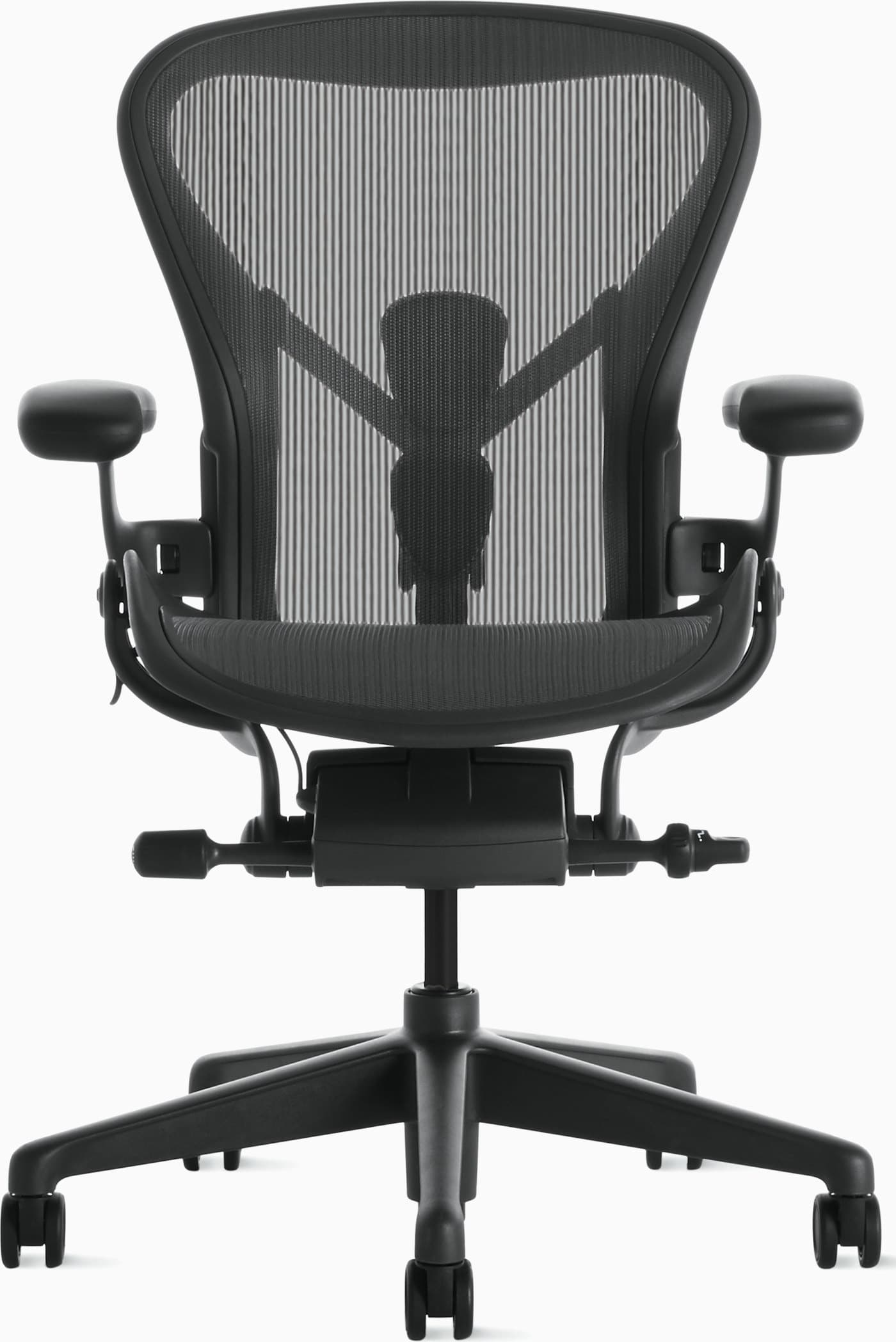
Herman Miller
Aeron Chair
Iconic mesh ergonomic chair engineered for all-day remote work.
$1,400–$1,800
Choose Aeron if you want cool mesh and A/B/C sizing instead of Embody’s fabric Pixelated Support.
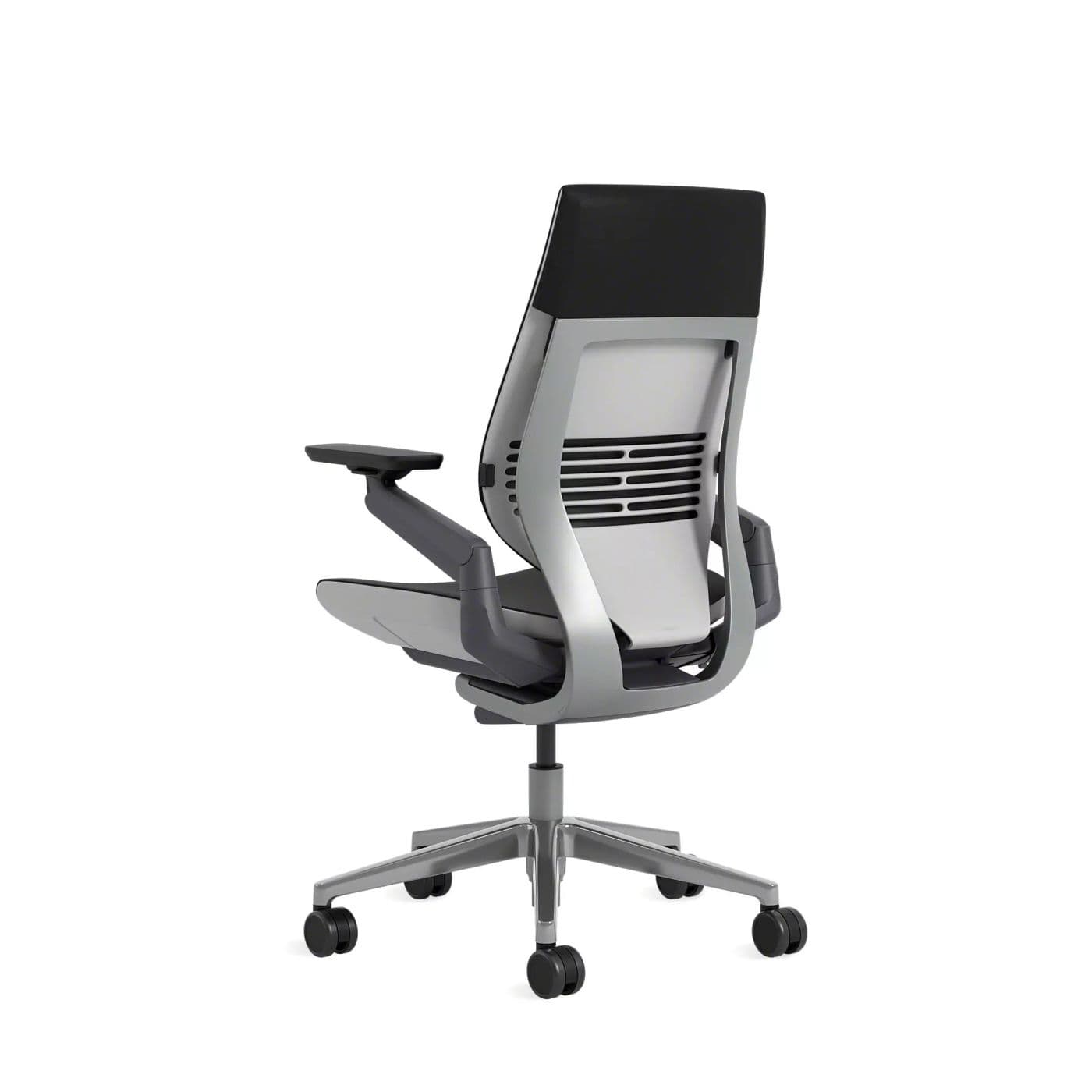
Steelcase
Gesture Chair
Highly adaptive chair designed for modern device-driven postures.
$1,200–$1,600
Better when you shift between laptop, tablet, and phone postures often.
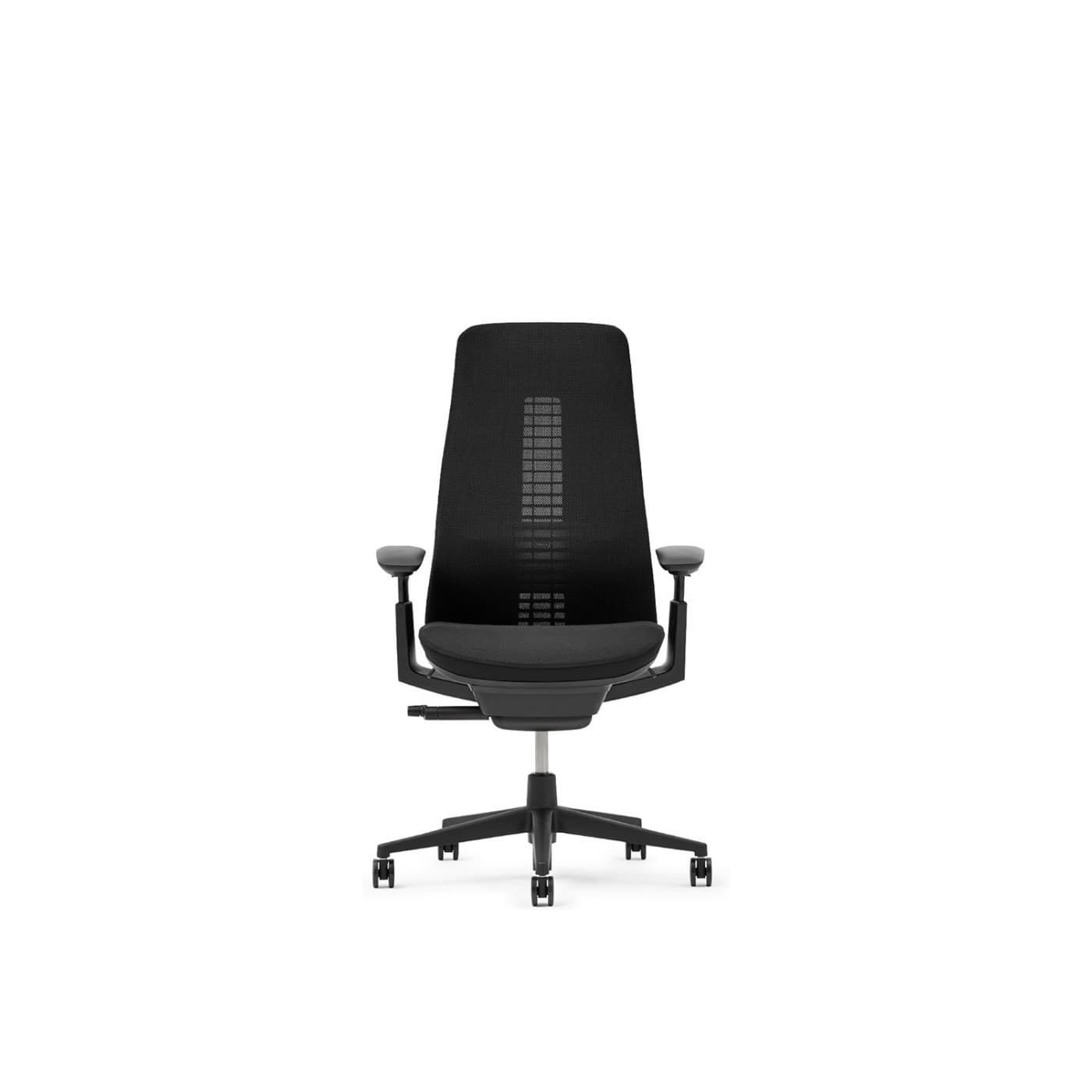
Haworth
Fern Chair
Wave Suspension ergonomic chair with edgeless back comfort.
$1,000–$1,600
Flexible Wave Suspension back with a different comfort character than Embody.
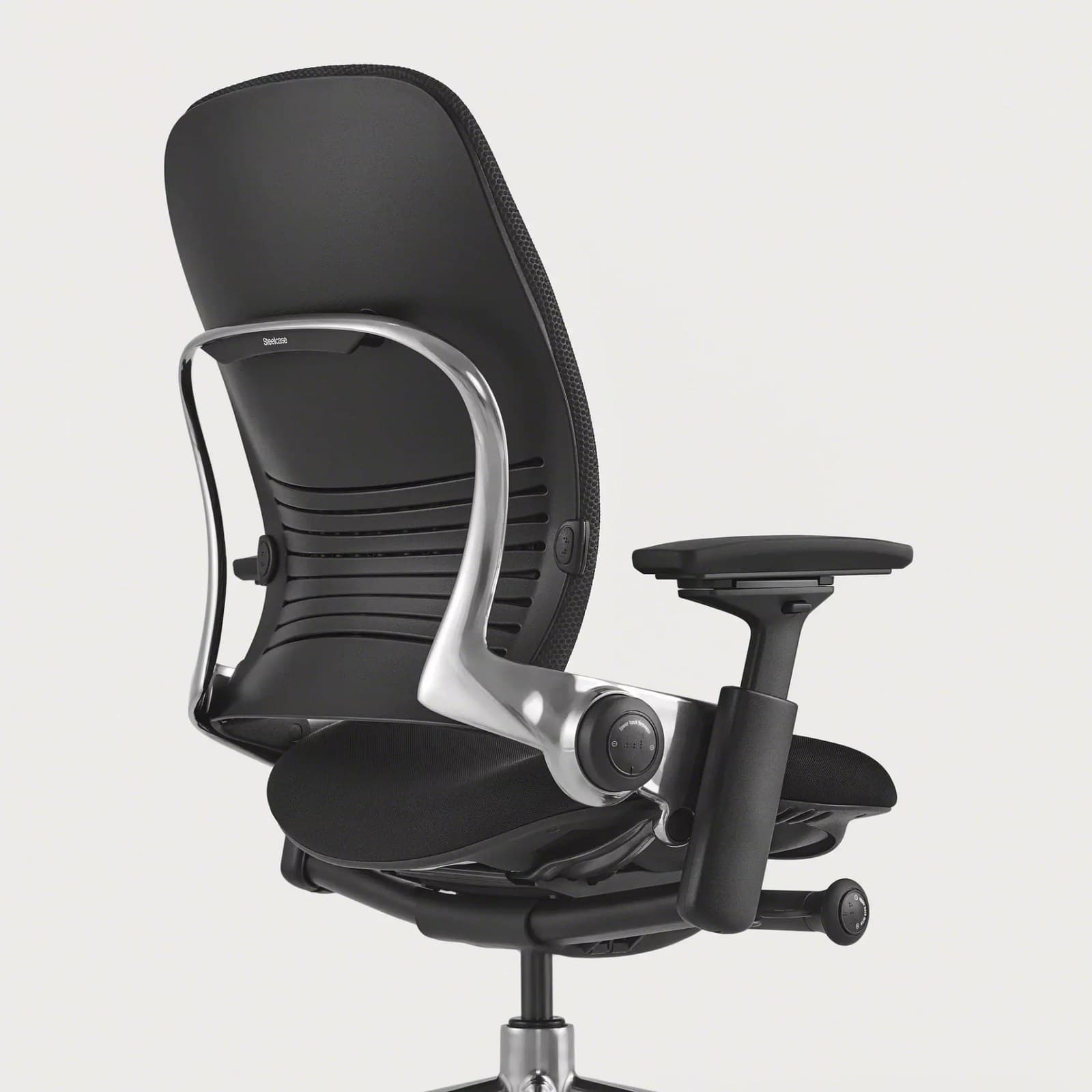
Steelcase
Leap Chair
LiveBack ergonomic chair built for long seated workdays.
$1,000–$1,500
Cushioned LiveBack option with strong long-day reputation.
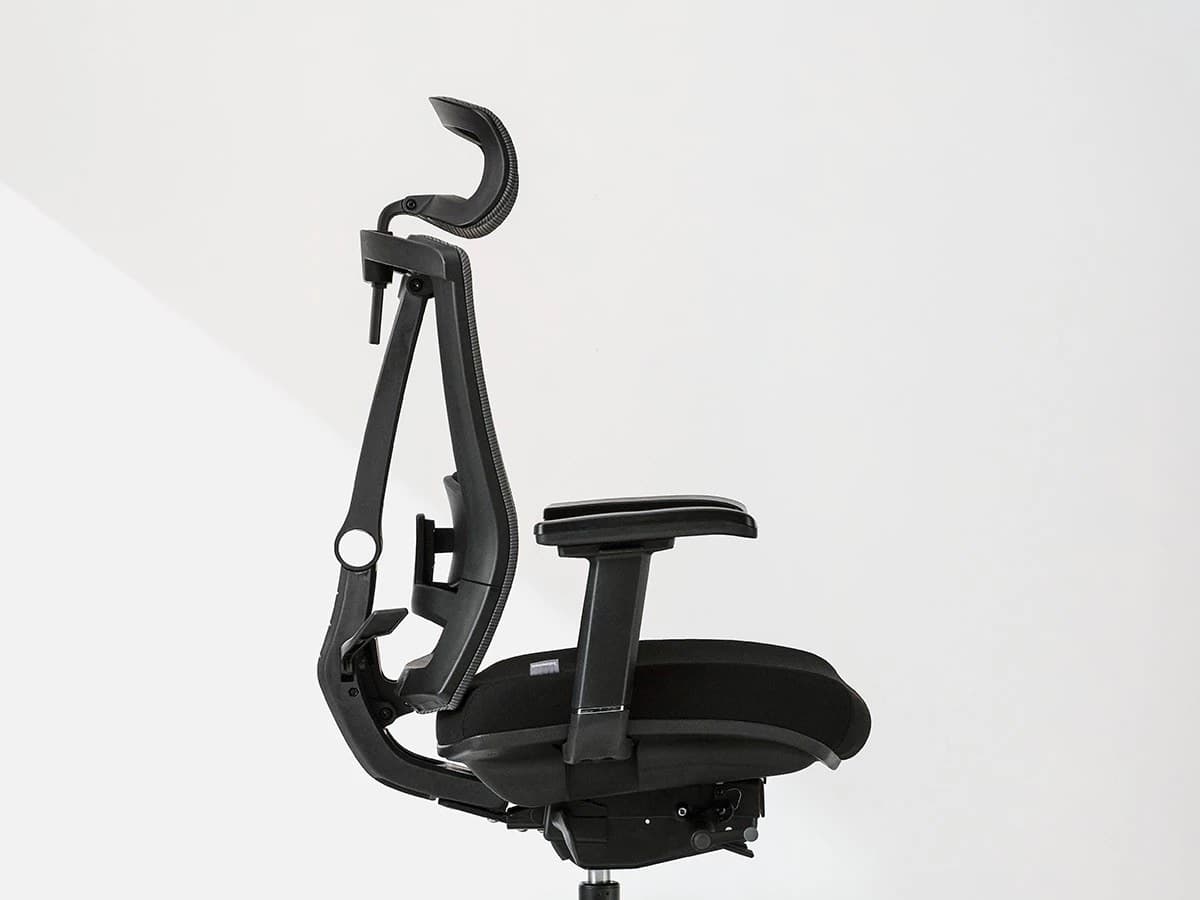
Autonomous
ErgoChair Pro
Mid-range ergonomic chair with headrest and nine adjustment points.
$400–$550
Feature-rich mid-range alternative with headrest — not equivalent build or warranty.
Continue your research
Guide
How to choose an office chair
Continue researching home-office options on AuraOX.
Guide
Office chair height guide
Continue researching home-office options on AuraOX.
Guide
Best office chairs for remote workers
Continue researching home-office options on AuraOX.
Guide
Best office chairs for long hours
Continue researching home-office options on AuraOX.
Review
Herman Miller Aeron review
Continue researching home-office options on AuraOX.
Comparison
Aeron vs Embody comparison
Continue researching home-office options on AuraOX.
Review
Steelcase Leap review
Continue researching home-office options on AuraOX.
Quiz
Office chair quiz
Continue researching home-office options on AuraOX.
Guide
Office chairs hub
Continue researching home-office options on AuraOX.
FAQ
Frequently asked questions
Is the Herman Miller Embody worth it in 2026?
For full-time desk work with a preference for fabric Pixelated Support over mesh, yes — the value shows up over years via comfort character and the 12-year warranty. For light use or a tight budget, a mid-range chair is usually smarter.
What is the difference between Embody and Aeron?
Embody uses a Pixelated Support matrix under fabric with Backfit and adjustable seat depth on one size. Aeron uses breathable mesh, A/B/C shells with depth largely fixed by size, and often more arm-adjustment axes on fully loaded configs. Pick Embody for fabric/distributed support; pick Aeron for mesh and multi-size shells.
Is the Embody good for long hours?
It is one of the strongest long-hour fabric options because of pressure distribution through Pixelated Support, provided seat depth and Backfit fit. Still plan movement breaks; no chair replaces changing positions.
Is the Embody good for a home office?
Yes for a dedicated home office where you sit most of the workday. Pair it with correct desk height and monitor placement. It is overkill for a kitchen-table setup used a couple of hours a day.
Does the Embody have adjustable seat depth?
Yes. Typical configs offer about 15–18" of seat depth adjustment, which is a key fit tool because Embody is a single size rather than Aeron’s A/B/C shells.
Does the Embody come with a headrest?
Standard Embody work chairs do not include a Herman Miller factory headrest. Some users explore third-party options; if reclined neck support is a must-have, consider chairs that ship with a headrest.
How much does the Herman Miller Embody cost?
Configured chairs typically land around $1,800–$2,200 depending on finish and options. Always check current retailer pricing — promotions and configs move the number.
Is the Embody worth the price?
For full-time desk work with a preference for fabric Pixelated Support over mesh, the price is easiest to justify over years of daily use and the 12-year warranty. For light use or a tight budget, a mid-range chair is usually smarter.
What is the Embody warranty?
Herman Miller / MillerKnoll typically backs the chair with a 12-year, 3-shift limited warranty; confirm terms for your purchase channel and config. Published weight capacity is up to 300 lb.
Does the Embody come in different versions?
Embody is primarily a single-size work chair with configuration choices such as fabric, finish, and arms rather than Aeron-style A/B/C shells. Confirm current options with the manufacturer or an authorized retailer — naming and packages can change.
Check the current Embody price
Configurations and promotions change. Confirm Backfit setup, seat depth range, finishes, and return policy before you buy.
Check price